How to Use AI Interpretation for International Wedding Guests
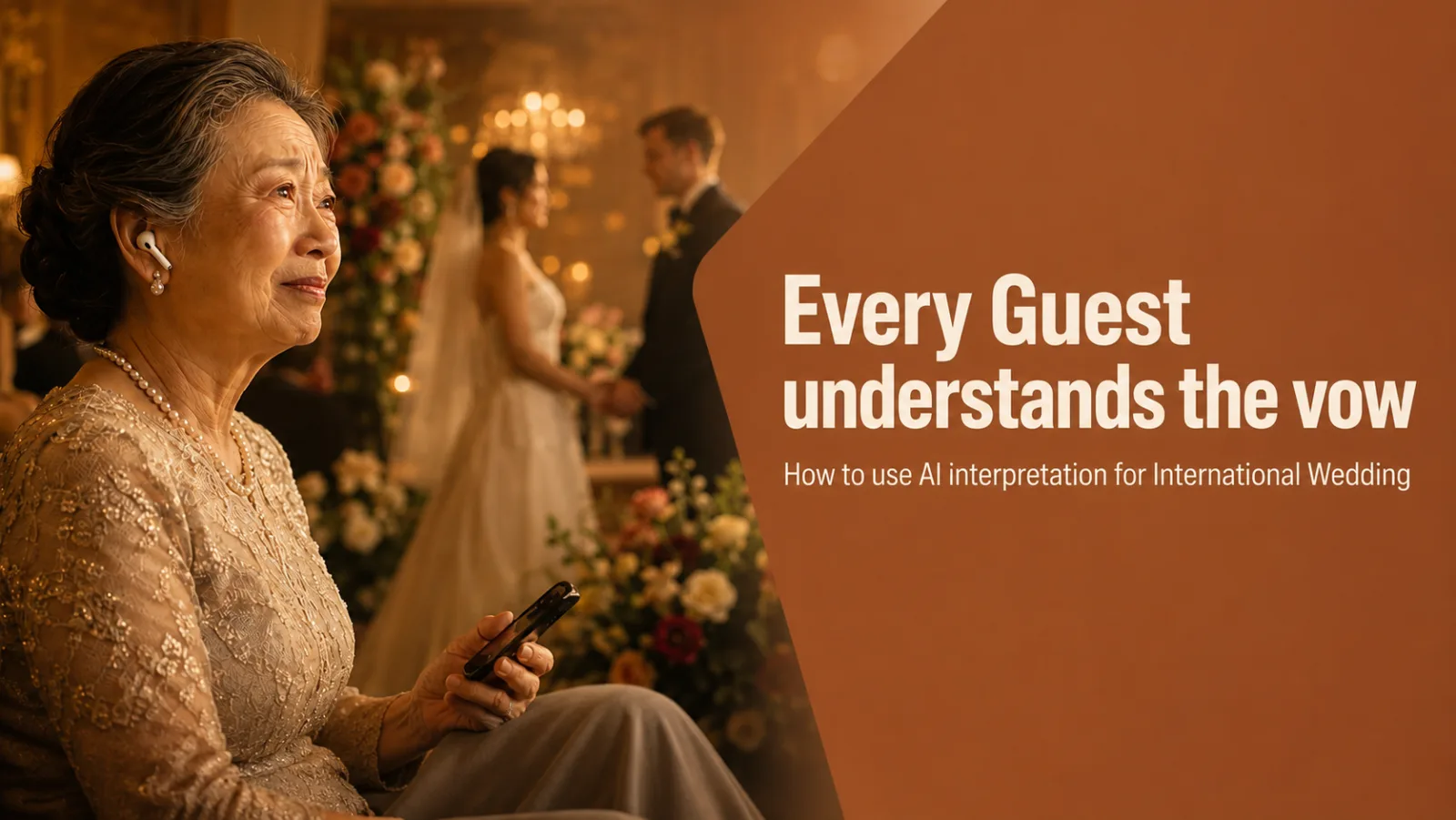
“My grandmother travelled 6,000 miles to attend our wedding. She deserves to understand the vows — not just watch everyone else cry.”
International weddings are beautiful because they bring different families, cultures and languages into the same room.
But they can also create a quiet distance.
A guest may see the smiles but miss the story. They may know that a speech is funny because everyone else is laughing, yet not understand the joke. They may watch their child or grandchild exchange vows without fully knowing what has been promised.
They are present — but not completely part of the moment.
That is why more couples are considering AI interpretation for their wedding.
A wedding should be experienced, not simply watched
Traditionally, couples might print a bilingual programme, repeat every part of the ceremony in two languages, or ask a bilingual relative to whisper into Grandma’s ear.
These options can still work well. Prepared written versions are especially helpful for vows, readings and song lyrics.
However, weddings are rarely completely scripted.
A father puts down his notes and speaks from the heart. The best man adds a story nobody expected. The officiant shares something personal about the couple. These are often the most memorable moments — and the hardest to prepare in advance.
AI interpretation allows international guests to follow these live moments as they happen.
How does AI interpretation work at a wedding?
The setup can be surprisingly simple.
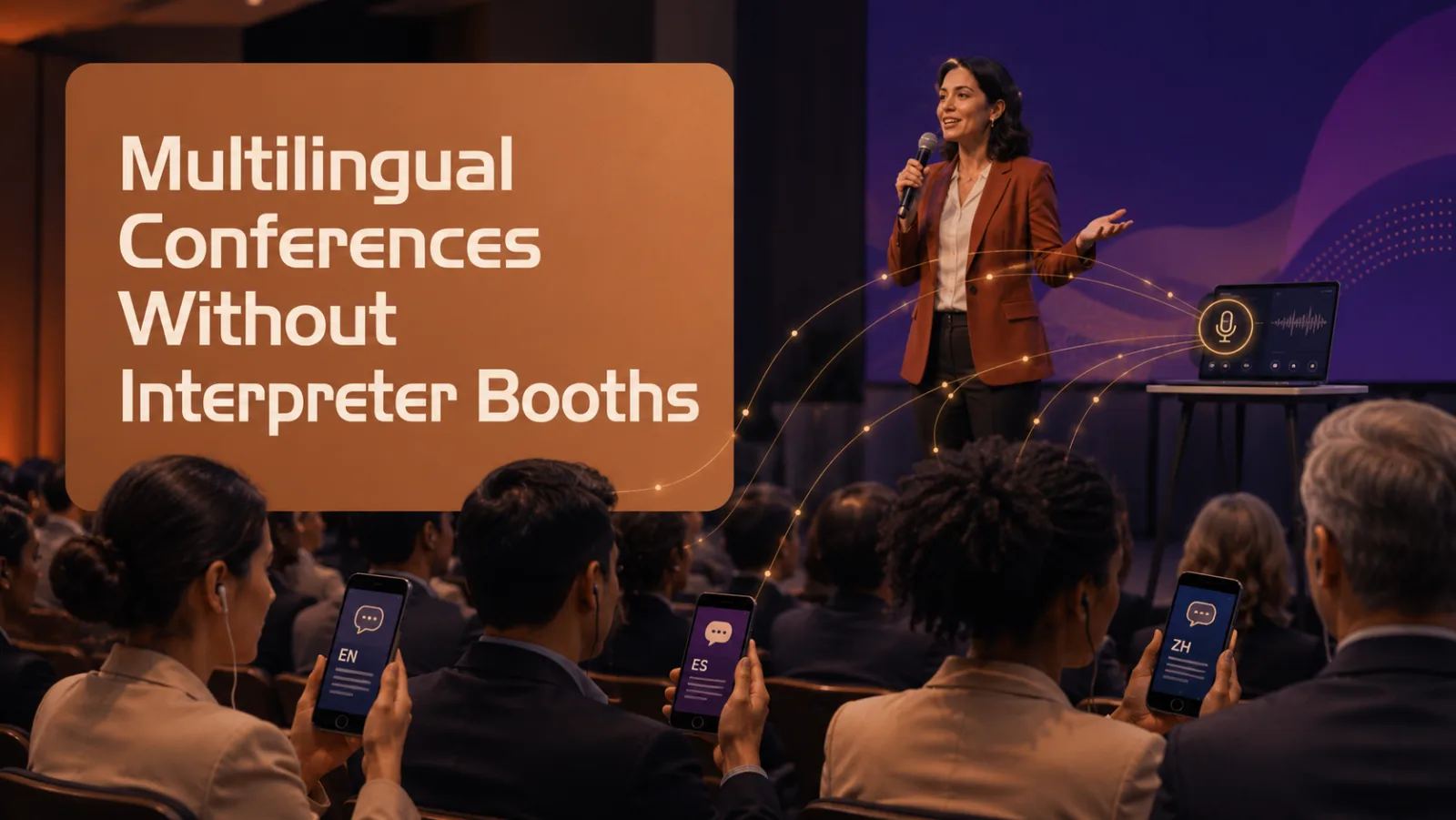
The officiant, couple and speech-givers use the wedding venue’s microphones as usual. Their speech is sent from the sound system to an AI interpretation platform.
Guests scan a QR code with their phones, choose their preferred language, and then listen through headphones or read the live interpreted text.
There is no need to pause after every sentence or repeat the entire ceremony in another language. Each guest can follow quietly while remaining seated with their family.
The QR code can be placed on:
- The wedding programme
- A small card on each seat
- Reception tables
- The welcome screen
- A message sent to guests before the wedding
One simple line is enough:
Scan the QR code, choose your language, and use headphones to listen. Guests who prefer to read can follow the live interpreted text on screen instead.
When is AI interpretation particularly helpful?
It can be a good choice when:
- The couple comes from different language backgrounds
- Grandparents or parents are travelling from overseas
- Several languages are needed at the same wedding
- International guests want to follow both the ceremony and the speeches
- The couple wants to avoid repeating every section in two languages
- Asking a family member to interpret would stop them from enjoying the wedding
AI interpretation does not have to replace every other option.
You might still prepare a carefully reviewed written version of the vows. You may also need a human interpreter if one of the people getting married cannot understand the official ceremony language, or if local marriage rules require one.
A thoughtful wedding can use both: human care for the most sensitive or legal moments, and AI interpretation to help guests follow the wider celebration.
A few details make a big difference
Good interpretation begins with clear sound, so the officiant and speech-givers should use microphones. It is also helpful to test the system at the venue before the wedding, using the actual sound equipment and internet connection.
Names, family nicknames, places and cultural terms should be added to the platform’s glossary where possible.
Most importantly, help older guests join before the ceremony begins. A welcoming team member can show Grandma how to scan the QR code, select her language and adjust the volume. It may take only a minute, but it could change how she experiences the whole day.
Where Event Translate may fit
Event Translate is designed for live gatherings where people need to understand the same message in different languages.
Wedding guests can scan a QR code and open the listener page directly in their phone browser, without downloading an app or creating an account. They can then listen through headphones, read the live interpreted text, or use both.
It can be used for the ceremony, the officiant’s message, parents’ speeches, wedding-party toasts and reception announcements. Couples can also try the free trial before the wedding to test their voices, languages and venue setup.
AI will not reproduce every joke, poetic expression or cultural reference perfectly. But for many international weddings, it can help close the distance between being physically present and truly understanding what is happening.
Because the people you love did not travel thousands of miles simply to watch your wedding.
They came to laugh with you, cry with you, and understand the promises that brought everyone together. Test your own voices, languages and venue before the day: start a 20-minute free trial with no credit card required, or see what each plan includes.
Frequently asked questions
Do wedding guests need to download an app to use AI interpretation?
It depends on the platform. With Event Translate, guests scan a QR code and open the listener page in their phone browser. They choose a language and then listen through headphones or read the live interpreted text, without creating an account or installing anything.
Should we still book a human interpreter for the ceremony?
Sometimes yes. If one of the people getting married cannot understand the official ceremony language, or if local marriage rules require an interpreter, use a qualified human interpreter. Many couples combine both: human care for the legal or most sensitive parts, and AI interpretation so guests can follow the speeches and the rest of the celebration.
What do we need to prepare at the venue?
Clear microphones for the officiant and speech-givers, a clean speech feed from the sound system, a reliable internet connection, and a rehearsal using the actual equipment. Adding names, family nicknames, places and cultural terms to the glossary beforehand also improves the result.