Conference Simultaneous Interpretation Equipment: What Do You Actually Need in 2026?
The venue is booked, the speakers are confirmed, and guests are coming from several countries. Then the equipment question arrives: “Do we need interpreter booths and a hundred headsets?”
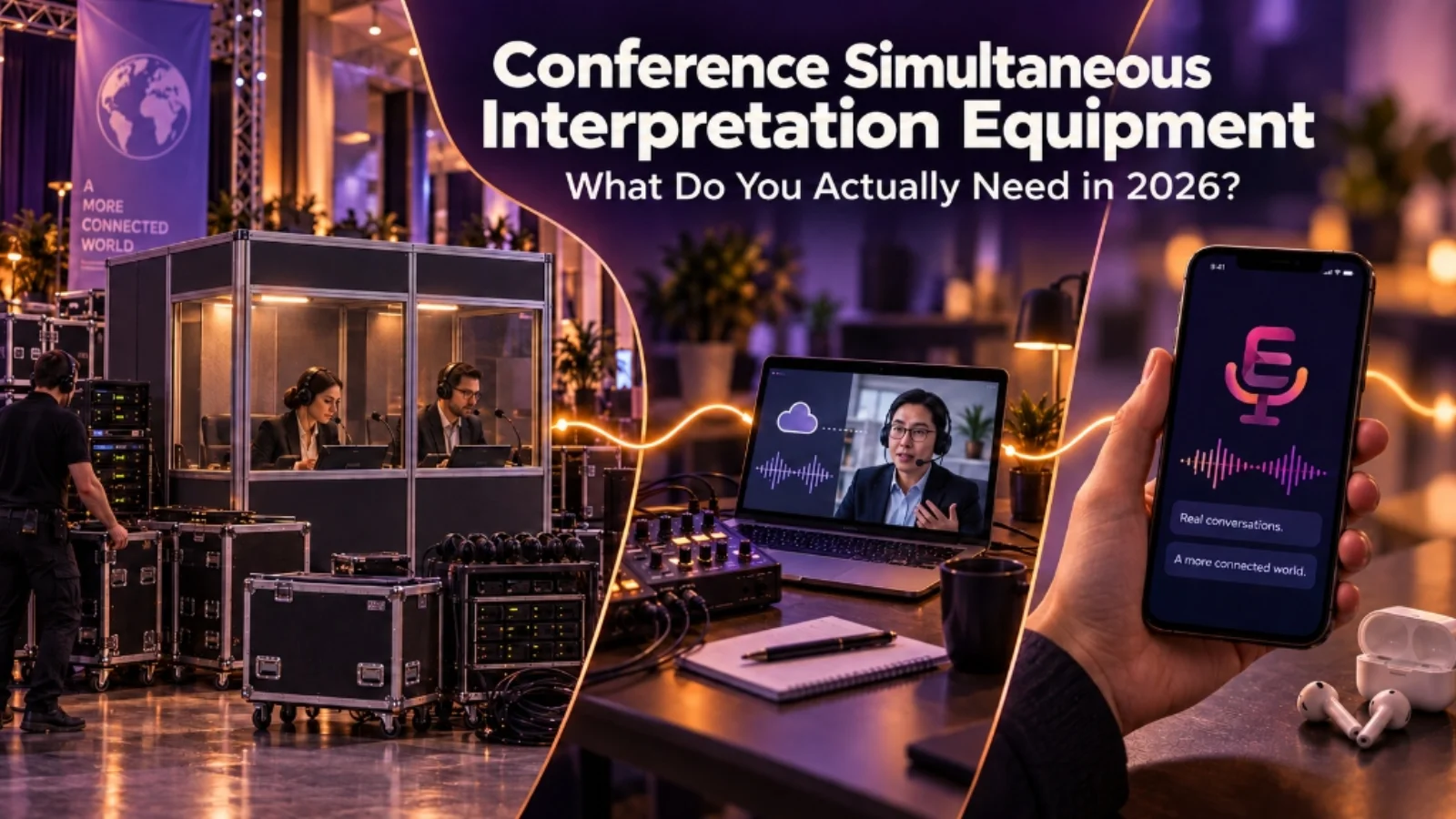
It depends on something you should decide first: who—or what—will interpret the event? In 2026, there are three common routes for simultaneous interpretation: interpreters at the venue, interpreters working remotely, and AI interpretation. Each can help people follow the conversation, but each asks something different of your venue, AV team and audience.
Which route fits your event?
Is a mistake likely to have serious consequences, or does the discussion depend heavily on nuance? Start with qualified human interpreters. If you have space and want the team at the venue, explore on-site simultaneous interpretation. If you need human judgement but have no suitable booth space, consider remote simultaneous interpretation.
Is the session a presentation, training, workshop or breakout where the main challenge is reaching more languages? AI interpretation can be worth testing, particularly when a full interpreter setup is beyond that session’s budget. Test it with your actual speakers and languages before deciding.
You can also mix approaches: human interpreters for a sensitive plenary, another arrangement for smaller workshops. The question is whether people can understand this particular content well enough to participate.
What equipment does each simultaneous interpretation route need?
| Approach | Core equipment and people | Attendees listen through | Often overlooked |
|---|---|---|---|
| On-site human | Qualified interpreters, typically booths and interpreter consoles, a stage audio feed, and a language distribution system | Usually hired receivers and headphones; some systems support personal devices | Booth sightlines, interpreter breaks, distributing and collecting devices |
| Remote human | Qualified interpreters, a remote platform, clear audio and useful video sent to them, reliable internet, and a return path for each language | Personal devices or venue receivers, depending on the system | Audience Q&A, return audio routing, interpreters’ view of speakers and slides |
| AI | Clear microphone or mixer feed, a compatible device and AI platform, internet, and a way for guests to join | Connected phones or laptops, plus headphones for translated audio | Venue Wi-Fi, background noise, terminology and support for guests without suitable devices |
These are typical simultaneous setups, where the speaker continues while people listen to the interpretation. For a small, sensitive meeting, consecutive interpretation may be simpler: a human interpreter speaks after the presenter pauses. It needs less equipment but more time in the programme.
1. On-site human interpretation: a complete system
In a conventional large conference, an interpreter listens to the stage from an acoustically isolated booth and speaks into a separate language channel. That channel goes to audience receivers or another compatible listening system. Human interpreters can respond to context, tone and unexpected changes in a discussion, which matters especially for nuanced or high-stakes content.
The practical work is larger than renting a booth. Ask if the quote includes consoles, transmission, receivers, headphones, technicians and delivery. Check that interpreters can see the stage and slides, and decide who will hand out and collect devices. If your event has several breakout rooms, choose which sessions genuinely need a full simultaneous setup; duplicating it in every room changes the cost and logistics.
2. Remote human interpretation: no booth at the venue, but audio still travels both ways
“Remote” tells you where the interpreters work. It does not mean the interpretation is automated. You must send the speaker’s voice and useful visuals to the interpreters, then get each interpreted language back to the correct listeners.
This can help when booth space is scarce or the interpretation team cannot travel. But your AV plan needs to cover every microphone, including audience questions. If the roaming Q&A microphone never reaches the remote platform, those questions cannot be interpreted. For a hybrid event, work out separately how people online and in the room will choose their language.
3. AI interpretation: less dedicated hardware, more attention to the basics
AI services can take a clear audio feed and send translated speech or text to attendees’ devices. You may avoid renting booths and a trolley of receivers. You still need a working audio chain.
For a conference, a clean feed from the mixing desk is usually better than a laptop microphone at the back of the room, which picks up echo and nearby conversations. Test the podium mic, panel mics and Q&A mic. Check connectivity with a realistic number of attendees, since an empty-room speed test cannot tell you how the network behaves during the event.
Think about the audience, too. Will they know how to join? Have headphones? What help is available to someone without a suitable device or mobile data? Ask a person who understands the target language to listen to a rehearsal with your real names and specialist terms.
AI can bring language access to sessions that would otherwise have none. It can also make mistakes, especially with overlapping voices, poor sound or unfamiliar terminology. Where misunderstanding could materially affect a decision or someone’s safety, plan for appropriate human interpretation.
Where Event Translate fits
Event Translate is one option in the AI interpretation category. It receives speaker audio and provides translated speech and live text. Attendees scan a QR code or open a link, choose their language and follow along in their browser without installing an app. With a venue sound desk, a typical plan looks like this:
Stage microphones → mixer/audio connection → Event Translate → attendees’ connected devices and headphones.
Imagine a hotel conference with a main plenary and smaller workshops. You might hire qualified interpreters for a sensitive plenary, then test Event Translate for workshops where no interpretation would otherwise be available. Or you might use it across a presentation-led event, provided your languages, audio and network pass a realistic rehearsal.
Planning a multilingual event? Test Event Translate with your actual microphone setup, terminology and a listener who knows the target language: start a 20-minute free trial with no credit card required, or check what each plan includes. That short test tells you more than any generic equipment checklist.
Frequently asked questions
Do I always need booths and receivers?
No. They are common for conventional on-site simultaneous interpretation, while remote human and AI setups may deliver audio through personal devices. Check the chosen system and the needs of your audience.
Can guests use their own phones?
Often, if the platform supports it and guests have compatible devices, headphones and connectivity. Provide joining instructions and support for those who cannot use their own device.
Which option costs less?
Compare the whole event: interpreters, equipment, technical crew, internet, number of rooms and languages, and the consequences of a critical misunderstanding. A mixed arrangement can be the more sensible choice.