One Tour, Many Languages: AI Interpretation for Guided Tours
A wine guide walks between rows of vines while guests listen to the story behind each bottle.
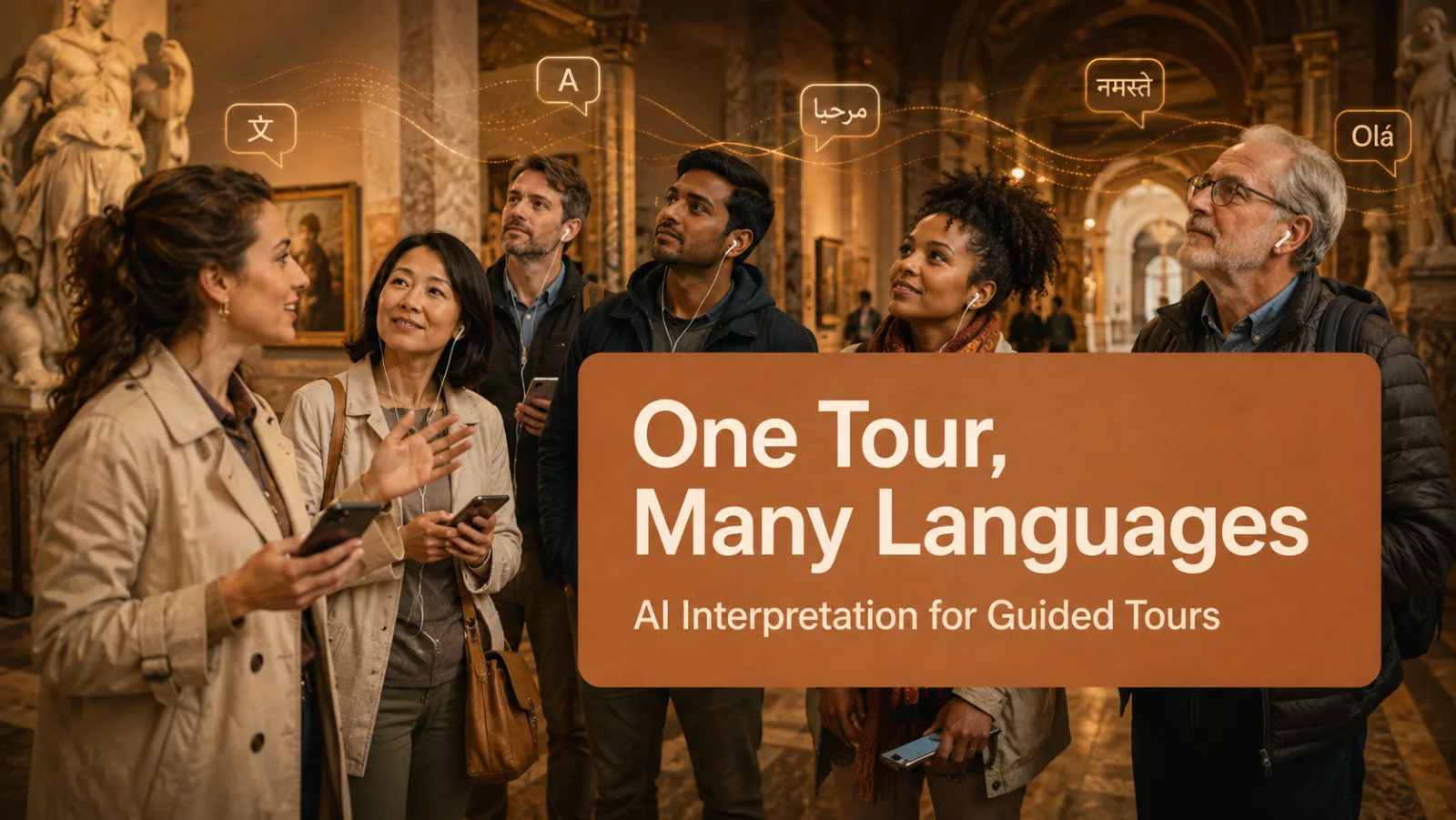
A museum group moves from one gallery to another. A factory manager explains a production line. A university welcomes overseas students, while a company hosts investors from several countries.
These tours may look very different, but they often face the same question:
How can one guide help everyone understand without separating visitors into different language groups?
Traditionally, multilingual tours rely on transmitter-and-receiver headsets. Organisers need to estimate the number of receivers, rent the equipment, charge every unit, distribute it at check-in and collect it again afterwards.
If 40 receivers have been booked but 48 guests arrive, eight people may be left without one. Visitors also need to stay within the transmitter’s operating range.
AI interpretation offers a simpler alternative.
From a box of receivers to visitors’ own phones
For a simple guided tour, the guide can use one phone as the operator device. The phone captures the guide’s speech and sends it for live AI interpretation.
Visitors only need to:
- Scan a QR code or open a link.
- Choose their language.
- Put on their own earphones.
- Listen through their phone using Wi-Fi or mobile data.
There is no app to download and no separate receiver to carry.
The group size is no longer limited by the number of receiver units hired in advance. Organisers also avoid queues for distributing equipment, checking batteries and collecting every device at the end.
Distance works differently too
Traditional tour-guide headsets rely on the distance between the transmitter and the receivers. If someone falls behind, enters another room or moves beyond the signal range, they may lose the audio.
Internet-based AI interpretation does not depend on that short-range connection. As long as the guide’s operator phone and the visitors’ phones have a stable internet connection, guests can continue listening while the group moves.
This can be especially useful for:
- Wine and vineyard tours covering a large outdoor area
- Museum tours moving between galleries
- Factory visits where visitors must stand behind safety barriers
- Heritage tours across several buildings
- Coach and cruise tours where people are spread across a vehicle or deck
- University campus tours with large groups
- Investor or company visits moving between offices and facilities
It does not mean that internet quality can be ignored. The real route should still be tested beforehand, particularly in basements, rural areas and buildings with thick walls.
Keep the experience simple
A multilingual tour does not need to become a technical production.
Before the tour, confirm which languages visitors need and share the QR code while everyone is still at the meeting point. Give guests a moment to choose their language and check their earphones before moving.
The guide can speak naturally, but clear sentences and brief pauses help the AI understand each idea. Important names, locations and industry terms can also be prepared in advance.
For a first test, invite a few people to walk the real route. Check whether they can join easily, hear clearly and remain connected at each stop.
When should AI interpretation be used carefully?
AI interpretation is useful for general commentary, demonstrations, storytelling and visitor questions. However, it should not be the only source of emergency, legal or safety-critical information.
For factory visits, for example, approved safety signs, trained staff and written instructions should remain in place. Highly sensitive negotiations may also require a professional interpreter or a hybrid approach.
Let everyone stay in the same tour
International visitors should not have to choose between staying with their friends and joining a separate language group.
With AI interpretation, one guide can lead one shared experience while each visitor listens in a language they understand. There are no boxes of receivers to manage and no fixed number of rented headsets deciding how many guests can take part.
Event Translate helps visitors receive live interpreted audio and text on their own phones. A simple test along your real tour route is often the best way to discover whether it suits your next international group.
One guide. One tour. Many languages. Walk your real route with a small group first: start a 20-minute free trial with no credit card required, or see what each plan includes.
Frequently asked questions
Do visitors need to download an app for a multilingual guided tour?
It depends on the platform. With Event Translate, visitors scan a QR code or open a link, choose their language and listen through their own earphones in the phone browser. There is no app to install, and no receiver to hand out or collect afterwards.
What happens if someone falls behind the group?
AI interpretation runs over the internet rather than a short-range transmitter, so visitors keep listening as long as their phone stays connected. Walk the real route in advance to check coverage — basements, rural sites and buildings with thick walls are where it usually breaks.
Can AI interpretation deliver safety instructions on a factory visit?
It should not be the only source. Keep approved safety signage, written instructions and trained staff in place, and use AI interpretation for the commentary, demonstrations and visitor questions around them.